

The Solar System: Planets, Moons, and Beyond
Introduction to the Solar System
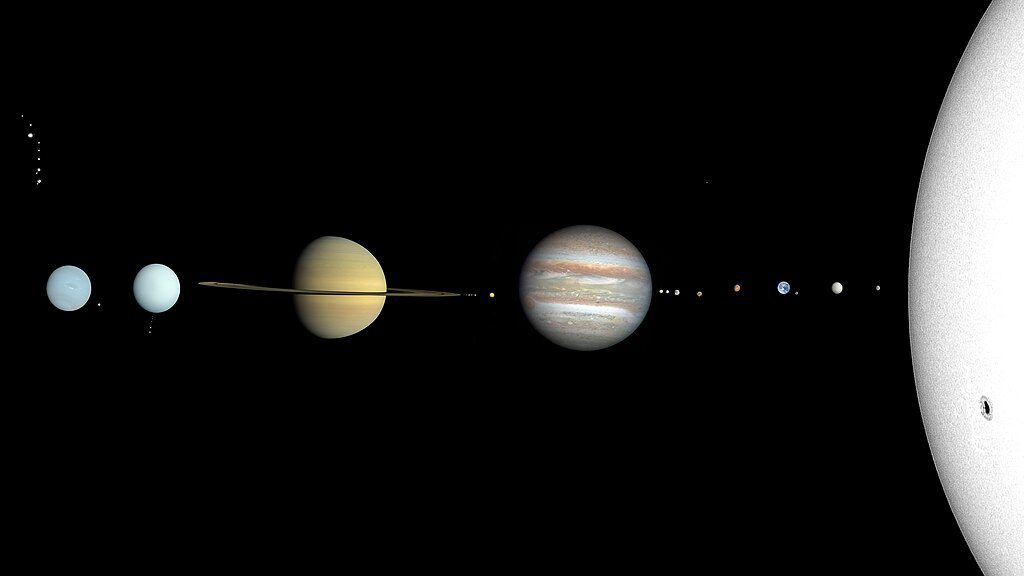
The solar system is a vast and fascinating cosmic neighborhood that has captured human curiosity for centuries. It consists of the Sun, eight planets, their moons, dwarf planets, asteroids, comets, and countless smaller objects bound together by gravity. Understanding the solar system is essential for astronomy, space exploration, and understanding the origins of life on Earth. This blog explores the planets, moons, and other celestial objects that make up our solar system and highlights what makes each one unique.
The Sun: The Heart of the Solar System
At the center of the solar system lies the Sun, a massive star that provides energy, light, and gravitational stability. Composed mainly of hydrogen and helium, the Sun’s nuclear fusion processes generate heat and light that sustain life on Earth. Its gravity holds the planets, asteroids, and comets in orbit, while solar winds and magnetic activity influence planetary atmospheres and space weather. Understanding the Sun is crucial for predicting solar flares, protecting satellites, and studying stellar evolution.
The Planets: Inner and Outer Worlds
The solar system’s planets are divided into inner terrestrial planets and outer gas and ice giants:
Inner Planets
-
Mercury: The smallest and closest planet to the Sun, Mercury has extreme temperatures and a heavily cratered surface. Its rapid orbit and lack of atmosphere make it a fascinating target for studying planetary geology.
-
Venus: Similar in size to Earth but with a thick, toxic atmosphere rich in carbon dioxide. Venus experiences a runaway greenhouse effect, making it the hottest planet in the solar system.
-
Earth: The only known planet to support life, Earth has a balanced atmosphere, liquid water, and a magnetic field that protects it from solar radiation.
-
Mars: Known as the Red Planet, Mars has polar ice caps, the largest volcano in the solar system, and evidence of past liquid water. It is a primary target for exploration and potential human colonization.
Outer Planets
-
Jupiter: The largest planet, a gas giant with a massive magnetic field, dozens of moons, and the famous Great Red Spot. Jupiter influences the solar system’s gravitational dynamics.
-
Saturn: Renowned for its spectacular rings, Saturn is a gas giant with numerous moons, including Titan, which has a dense atmosphere and lakes of methane.
-
Uranus: An ice giant with a unique tilted rotation axis, Uranus has a faint ring system and icy composition that challenges planetary formation models.
-
Neptune: Another ice giant, Neptune is known for supersonic winds, strong storms, and the largest moon, Triton, which has geysers and a retrograde orbit.
Dwarf Planets and Small Bodies
In addition to the main planets, the solar system contains dwarf planets like Pluto, Eris, Haumea, and Ceres. These objects are smaller than planets but still orbit the Sun and have sufficient mass to be nearly spherical. Other small bodies include:
-
Asteroids: Rocky remnants primarily found in the asteroid belt between Mars and Jupiter.
-
Comets: Icy bodies that develop bright tails when approaching the Sun.
-
Meteoroids: Small particles that may enter Earth’s atmosphere as meteors or meteorites.
Studying these objects provides insight into the solar system’s formation and early history.
Moons of the Solar System
Most planets have moons, ranging from small, irregular shapes to large, geologically active worlds. Notable examples include:
-
Earth’s Moon: Influences tides, stabilizes Earth’s rotation, and has been explored by humans.
-
Europa (Jupiter): Icy surface with a subsurface ocean, potentially harboring life.
-
Titan (Saturn): Dense atmosphere, rivers, and lakes of methane and ethane.
-
Enceladus (Saturn): Cryovolcanic activity suggests subsurface oceans.
-
Triton (Neptune): Retrograde orbit and cryovolcanism make it unique.
Studying moons helps scientists understand planetary formation, habitability, and potential resources for future exploration.
Exploration of the Solar System
Humanity has explored the solar system through telescopes, space probes, and crewed missions:
-
Robotic Missions: Voyager, Cassini, Juno, and New Horizons have provided unprecedented data on planets, moons, and distant objects.
-
Mars Rovers: Curiosity, Perseverance, and other rovers study geology, climate, and search for signs of past life.
-
Telescopes: Space telescopes like Hubble and James Webb provide detailed observations of planets, moons, and exoplanets.
-
Future Missions: Plans include returning samples from asteroids, exploring Europa and Titan, and eventually sending humans to Mars.
These missions expand our knowledge of planetary science, solar system dynamics, and potential life beyond Earth.
The Solar System’s Formation and Evolution
The solar system formed approximately 4.6 billion years ago from a giant molecular cloud. Gravity caused the cloud to collapse, forming the Sun at the center and a rotating protoplanetary disk around it. Particles collided and coalesced to form planets, moons, and smaller bodies. Understanding this formation process explains planetary composition, orbital patterns, and the presence of diverse planetary types.
Over billions of years, gravitational interactions, collisions, and migrations shaped the solar system we observe today. Studying these processes helps astronomers understand not only our solar system but also planetary systems throughout the galaxy.
Importance of Studying the Solar System
Exploring the solar system has profound scientific, technological, and cultural significance:
-
Scientific Knowledge: Understanding planetary atmospheres, geology, and magnetism informs broader astrophysical theories.
-
Resource Potential: Asteroids, moons, and planets may provide minerals, water, and energy sources for future human use.
-
Origins of Life: Studying planets and moons may reveal how life develops and where it could exist elsewhere.
-
Technological Advancement: Space exploration drives innovation in robotics, materials science, and engineering.
-
Inspiration: The solar system inspires curiosity, education, and international cooperation in science and exploration.
Conclusion
The solar system is a diverse, dynamic, and endlessly fascinating region of space. From the Sun’s powerful energy to the icy moons of the outer planets, each component tells a story about the origins and evolution of the cosmos. By studying planets, moons, and smaller bodies, humanity gains insight into our place in the universe and the potential for life beyond Earth. Continued exploration promises new discoveries, technological innovation, and a deeper understanding of the solar system that surrounds us.
Recent Articles Like This One