

TOI-3235 b: A Neptune-Like Exoplanet With a Dense Atmosphere
Discovery and Identification of TOI-3235 b
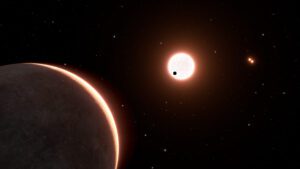
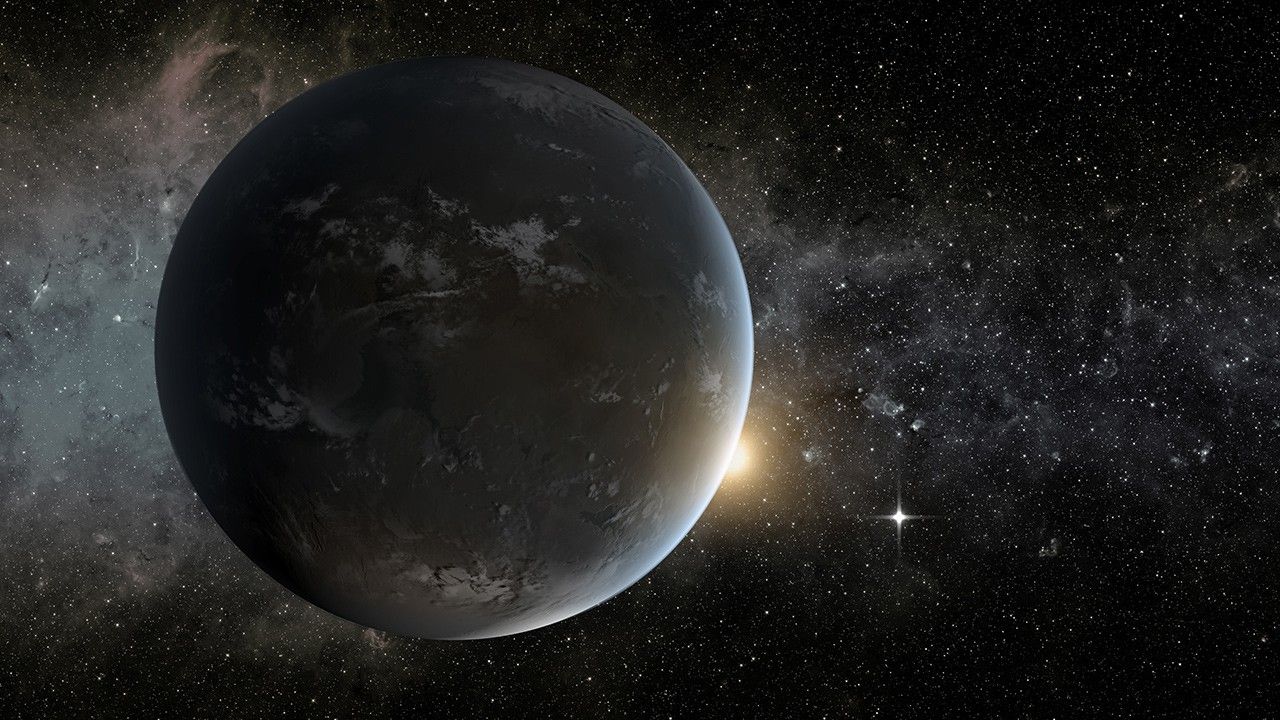
TOI-3235 b became notable in recent astronomy news as a newly confirmed Neptune-like exoplanet discovered through data from NASA’s Transiting Exoplanet Survey Satellite. The planet was identified when TESS detected consistent, shallow dips in the brightness of its host star, indicating a medium-sized planet passing in front of it. Follow-up observations helped confirm the planet’s size, mass, and orbital parameters.
Unlike massive gas giants, Neptune-like planets occupy a middle ground in planetary classification. They are larger than rocky worlds but smaller than Jupiter-sized planets, making them particularly important for understanding how planetary atmospheres and compositions change with size.
TOI-3235 b’s confirmation added valuable data to a category of planets that appears to be extremely common in the galaxy but absent from our own solar system.
Size, Mass, and Orbital Characteristics
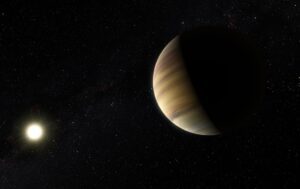
TOI-3235 b is estimated to be several times the size of Earth, placing it firmly in the category of sub-Neptune or Neptune-like planets. Its mass suggests a dense core surrounded by a thick envelope of gas, likely dominated by hydrogen and helium with traces of heavier elements.
The planet orbits relatively close to its host star, resulting in warmer temperatures than those found on Neptune in our solar system. This proximity may influence the planet’s atmospheric structure, causing expansion or gradual atmospheric loss over time.
Its orbital period is short, allowing astronomers to observe frequent transits and gather detailed data about the planet’s physical properties.
Why Neptune-Like Planets Are So Important
Neptune-like exoplanets are among the most common planets detected in the Milky Way, yet they are not represented in our own solar system. TOI-3235 b helps fill this gap by providing a real-world example that scientists can study in detail.
These planets are key to understanding how atmospheres form and evolve. Depending on their mass and temperature, Neptune-like planets may either retain thick atmospheres or lose them entirely, potentially transforming into rocky worlds.
TOI-3235 b sits at an important boundary that allows astronomers to study these processes directly.
Atmospheric Potential and Future Observations
TOI-3235 b’s size and orbital configuration make it an excellent candidate for atmospheric studies. During transits, some starlight passes through the planet’s atmosphere, allowing astronomers to detect chemical signatures using spectroscopy.
Future observations could reveal the presence of water vapor, methane, or other molecules, shedding light on atmospheric composition and circulation patterns.
Studying TOI-3235 b’s atmosphere may also help scientists understand why some planets develop thick gaseous envelopes while others remain rocky.
Why TOI-3235 b Is Big News
TOI-3235 b is big news because it represents a type of planet that appears to be extremely common throughout the galaxy. Each confirmed Neptune-like planet helps astronomers refine population statistics and improve models of planet formation.
The planet’s accessibility for follow-up observations makes it particularly valuable. Its discovery ensures it will likely be studied extensively in the coming years.
What TOI-3235 b Reveals About Planet Formation
The existence of TOI-3235 b supports the idea that planetary systems naturally produce a wide range of planet sizes. It suggests that many planets form with enough mass to capture gas but not enough to become full gas giants.
By studying planets like TOI-3235 b, astronomers can better understand how small differences in mass and temperature lead to dramatically different planetary outcomes.
What TOI-3235 b Teaches Us About the Universe
TOI-3235 b highlights the diversity of planets beyond our solar system. Its characteristics show that planetary systems can produce worlds that have no direct analogs close to home.
As research continues, TOI-3235 b will remain an important example of the planets that dominate our galaxy.
Recent Articles Like This One