
TOI-2322 b: A Rocky Earth-Sized Planet Drawing Astronomers’ Attention
Discovery and Confirmation of TOI-2322 b
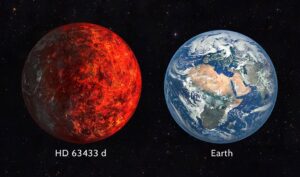
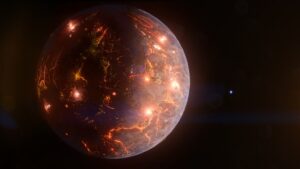
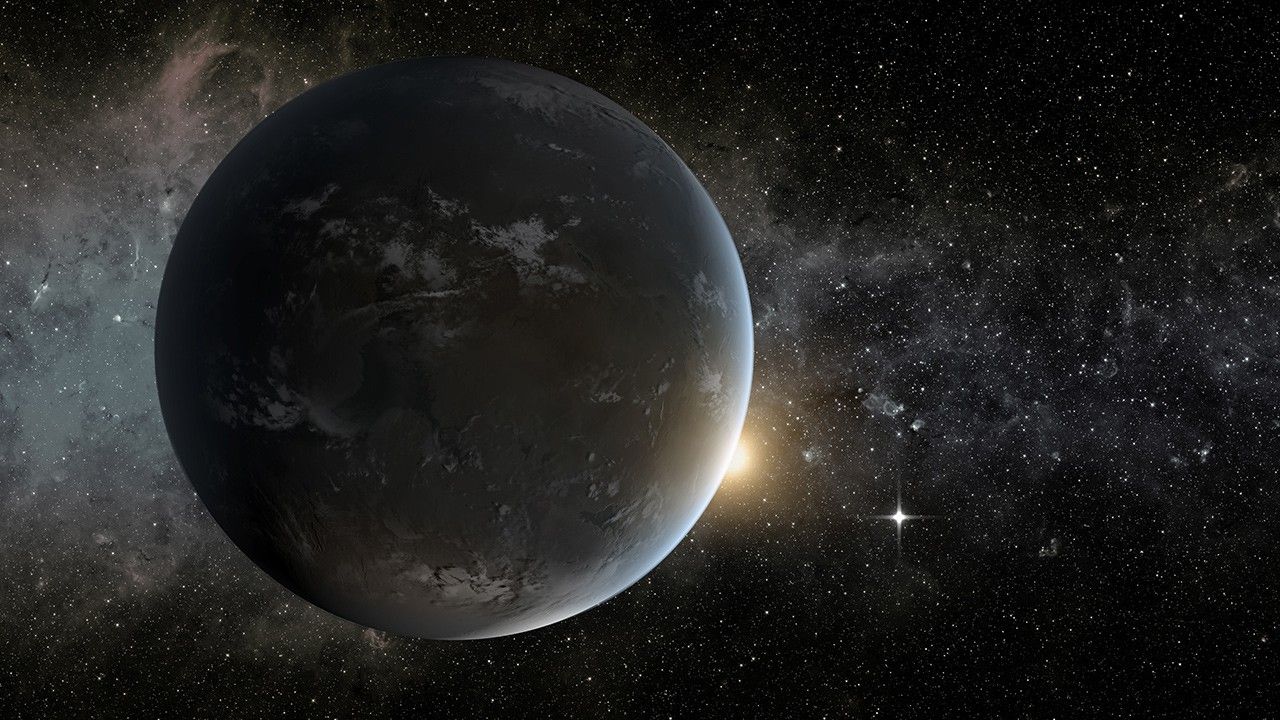
TOI-2322 b emerged as a major topic in recent astronomy news after being identified as one of the most promising rocky exoplanets discovered by NASA’s Transiting Exoplanet Survey Satellite. Unlike gas giants that dominate many discovery headlines, TOI-2322 b stands out because it is Earth-sized and likely composed primarily of rock and metal. Planets of this type are especially valuable to scientists because they offer insights into how terrestrial worlds form and evolve.
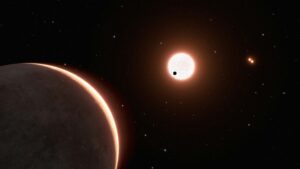
The planet was first flagged as a candidate when TESS detected periodic dips in the brightness of its host star. These dips suggested that a small planet was passing in front of the star from Earth’s perspective. Follow-up observations using ground-based telescopes helped confirm the planet’s size, orbit, and solid nature.
TOI-2322 b is part of a compact planetary system, which makes it even more interesting. Multi-planet systems allow astronomers to study how neighboring planets influence each other and how different types of worlds can form around the same star.
Size, Orbit, and Physical Characteristics
TOI-2322 b is classified as a rocky exoplanet with a radius similar to Earth’s. Its mass suggests a dense composition, meaning it is likely made of silicate rock with an iron-rich core. This places it firmly in the category of terrestrial planets rather than gas or ice giants.
The planet orbits a K-type star, which is slightly cooler and smaller than the Sun. Its orbit is relatively close, resulting in a short orbital period. Because of this proximity, TOI-2322 b is likely warmer than Earth, though not necessarily inhospitable depending on its atmospheric properties.
The planet’s size and density make it an excellent target for future atmospheric studies. Even a thin atmosphere could provide valuable clues about volcanic activity, surface conditions, and long-term planetary evolution.
Why Earth-Sized Planets Matter
Rocky planets like TOI-2322 b are central to the search for understanding how common Earth-like worlds are in the galaxy. While gas giants are easier to detect, terrestrial planets require more precise measurements and advanced detection techniques.
TOI-2322 b contributes to a growing catalog of small exoplanets that allow astronomers to compare planetary compositions across different stellar environments. Each new discovery helps refine models of planet formation and migration.
The planet also reinforces the idea that rocky worlds are common around stars smaller than the Sun. This has significant implications for the potential abundance of Earth-sized planets in the Milky Way.
Scientific Importance of the TOI-2322 System
Because TOI-2322 b resides in a multi-planet system, scientists can study gravitational interactions that reveal additional details about planetary masses and orbital stability. These interactions can also hint at how the system formed and evolved over time.
The host star’s relative brightness makes the system accessible for future observations with next-generation telescopes. This increases the likelihood that TOI-2322 b could become a benchmark rocky exoplanet for comparative studies.
By analyzing systems like TOI-2322, astronomers can better understand why some rocky planets retain atmospheres while others lose them, shaping their long-term habitability.
Why TOI-2322 b Is Big News
TOI-2322 b is big news because it represents the type of planet astronomers are most eager to find: small, rocky, and relatively nearby. Each confirmed Earth-sized planet adds to the evidence that worlds similar in size to our own are widespread throughout the galaxy.
The discovery also showcases the continued success of TESS in finding high-value exoplanet targets. While not every rocky planet will be habitable, each one deepens our understanding of planetary diversity.
TOI-2322 b’s confirmation strengthens the scientific case that terrestrial planets are not rare exceptions but common outcomes of star formation.
What TOI-2322 b Reveals About the Universe
TOI-2322 b demonstrates that the universe is efficient at producing rocky planets under a wide range of conditions. Its existence suggests that the processes that formed Earth are not unique, even if the exact conditions for life may be rare.
As more Earth-sized planets are discovered and studied, TOI-2322 b will remain an important reference point for understanding how small worlds form, survive, and evolve around different types of stars.
Recent Articles Like This One